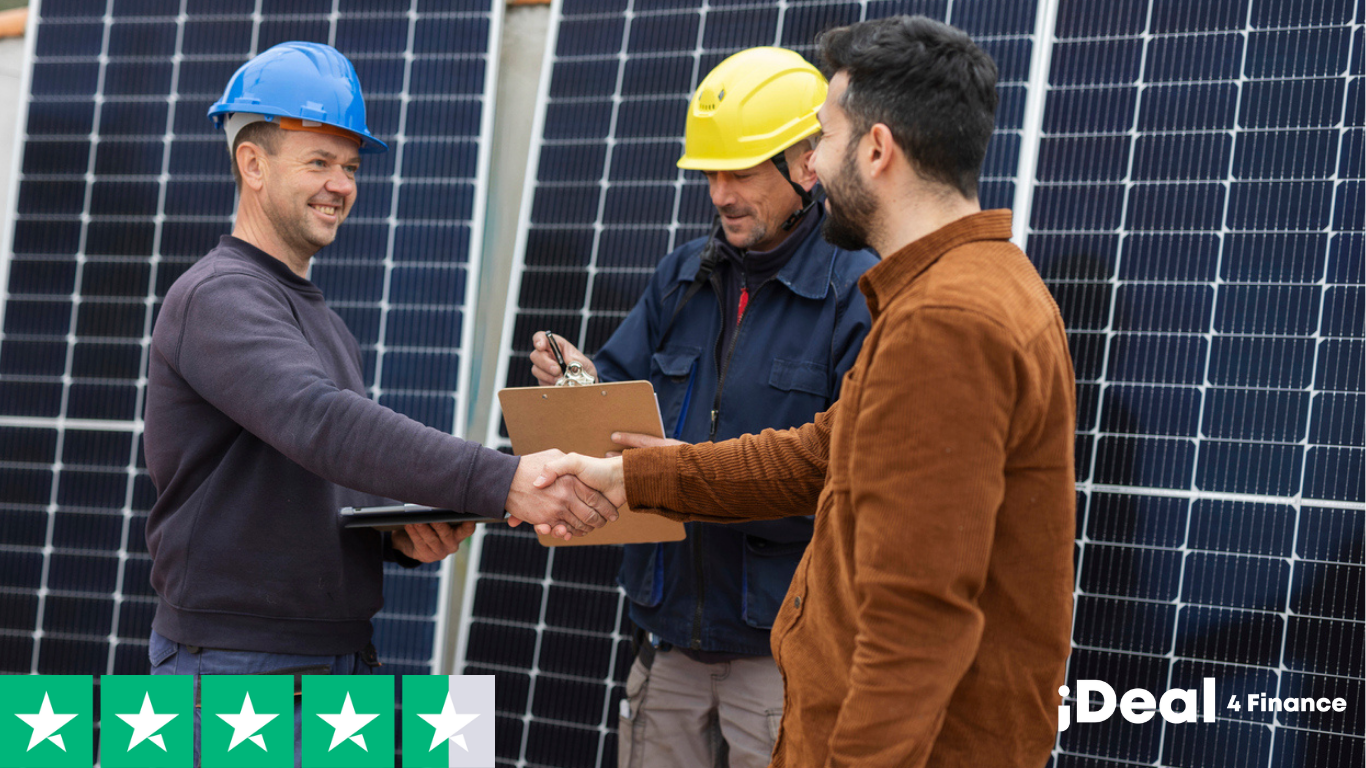
This guide is for UK solar installers, renewable energy contractors and energy efficiency specialists considering whether offering finance can improve their sales performance.
This is not personal finance advice for consumers.
If you are looking to offer finance to your customers in the UK, it must be structured correctly and comply with Financial Conduct Authority regulations.
For many solar installation businesses, introducing finance can increase conversion rates, improve average project value and reduce delays between quotation and installation. Many installers choose to offer solar finance to customers in the UK as part of their standard sales process.
Who is this guide for?
This guide is designed for businesses working in the renewable energy and energy efficiency sectors that want to offer finance options to their customers.
This includes:
• Solar photovoltaic installers
• Battery storage specialists
• Renewable energy contractors
• Electrical contractors installing solar systems
• Solar and storage package providers
• Energy efficiency specialists
• Solar panel finance
• Battery storage finance
• Solar and battery package finance
• Heat pump finance
• Whole home renewable upgrade finance
If you operate in one of these sectors, offering finance helps customers spread the cost of larger renewable installations while protecting your margins.

Table of Contents
- Why Do Solar Customers Hesitate to Proceed?
- How Does Offering Finance Change Customer Behaviour?
- Does Offering Solar Finance Increase Sales?
- How Finance Increases Solar Installation Value
- Is Offering Finance Worth It for Solar Installers?
- How Much Does It Cost to Offer Solar Finance to increase sales?
- When Should You Introduce Finance in the Sales Process?
- Are There Any Risks to Offering Solar Finance?
- Supporting Your Sales Process with the Right Finance Partner
- FAQs
- Conclusion
Why Do Solar Customers Hesitate to Proceed?
Many homeowners are interested in solar energy.
However, hesitation often arises when the full installation cost is presented upfront.
Common reasons include:
• High initial investment
• Competing household priorities
• Uncertainty around long-term savings
• Delays after receiving a quotation
Even when the customer intends to proceed, the project may be postponed due to affordability concerns.
How Does Offering Finance Change Customer Behaviour?
Offering finance changes how customers assess the project. This is why many installers now include solar finance options within their quotations rather than presenting it as a secondary option.
Instead of focusing on a total installation cost, the decision is reframed around affordability.
For example:
A £10,000 solar installation may feel like a significant upfront expense.
When presented as a structured monthly payment, the same installation may feel more manageable within a household budget.
This shift can:
• Reduce price sensitivity
• Increase confidence in proceeding
Does Offering Solar Finance Increase Sales?
For many installers, offering finance can improve sales performance.
This is typically seen through:
• Increased quotation acceptance rates
• Reduced delays between survey and installation
• Higher conversion from enquiry to confirmed project
Finance allows customers who may not have proceeded with an upfront payment to move forward with installation.
It also supports customers who prefer to preserve savings rather than use capital for home improvements.
How Finance Increases Solar Installation Value
Finance does not only impact whether a customer proceeds.
It can also influence what they choose to install.
Without finance, customers may:
• Reduce system size
• Remove battery storage
• Delay additional upgrades
This approach is commonly used by businesses that offer finance to customers for renewable installations as part of a structured sales process.
Is Offering Finance Worth It for Solar Installers?
For many businesses, the commercial impact of offering finance outweighs the associated costs.
Potential benefits include:
• Higher conversion rates
• Increased average order value
• Improved cash flow
• Stronger competitive positioning
Finance can also help smaller independent installers compete with larger national providers who already offer structured payment options.
How Much Does It Cost to Offer Solar Finance to increase sales?
The cost of offering finance depends on the type of finance product provided.
This may include:
• Interest free credit (often higher cost to the business)
• Interest bearing finance (lower cost to the business)
Costs are typically structured as a percentage of the transaction value.
However, many installers find that:
• Increased sales
• Higher specification systems
• Improved conversion rates
can offset these costs.
A finance provider can explain the commercial structure clearly before implementation.
When Should You Introduce Finance in the Sales Process?
Many installers introduce finance during the quotation stage, particularly when they offer solar finance as a standard payment option rather than waiting for objections.
Waiting until a customer raises affordability concerns can reduce its effectiveness.
Presenting finance as a standard payment option helps normalise the conversation and supports better decision making.
Are There Any Risks to Offering Solar Finance?
When structured correctly, the financial agreement is between the lender and the customer.
Your business is not responsible for collecting repayments.
However, it is important to:
• Work with a regulated credit broker
• Ensure marketing materials are compliant
• Present finance clearly and accurately
This ensures your business operates within Financial Conduct Authority requirements.
Supporting Your Sales Process with the Right Finance Partner
Introducing finance is not just about access to lenders.
It also involves how finance is presented to customers.
Ideal4Finance supports solar installers by:
• Providing access to a panel of UK lenders
• Managing the compliance framework
• Supporting application processing
In addition, a dedicated marketing team can help create tailored materials, including website content, quotation wording and customer messaging.
Materials can also be reviewed before use to ensure they align with Financial Conduct Authority requirements.
FAQs
Does offering finance increase solar sales?
For many installers, offering finance improves conversion rates by making installations more accessible and reducing upfront cost barriers.
Do I need FCA authorisation to offer solar finance to customers?
In the UK, offering regulated consumer finance is overseen by the Financial Conduct Authority.
In most cases, solar installers do not need to apply for full authorisation themselves. Instead, they operate as an Appointed Representative of an authorised credit broker.
This allows you to introduce finance to customers while the broker manages the regulatory and compliance requirements.
It is important that finance is presented correctly and within the appropriate permissions.
Do customers prefer monthly payments for solar installations?
Many customers are familiar with monthly payment structures and may find them easier to manage than a large upfront payment.
Can finance increase the size of solar installations?
Yes.
Customers may be more willing to include additional components such as battery storage or larger systems when costs are spread over time.
Do I get paid upfront if a customer uses finance?
In most cases, yes.
Once installation is complete and lender requirements are satisfied, payment is made directly to your business.
Get in Touch
Ready to offer finance in your watch boutique?
Call 020 3841 2817 or email [email protected] and our team will guide you through the process.